
Little Steps, Big Settles: How to Prepare for Your Child's First Week at Nursery
📖 4 min read
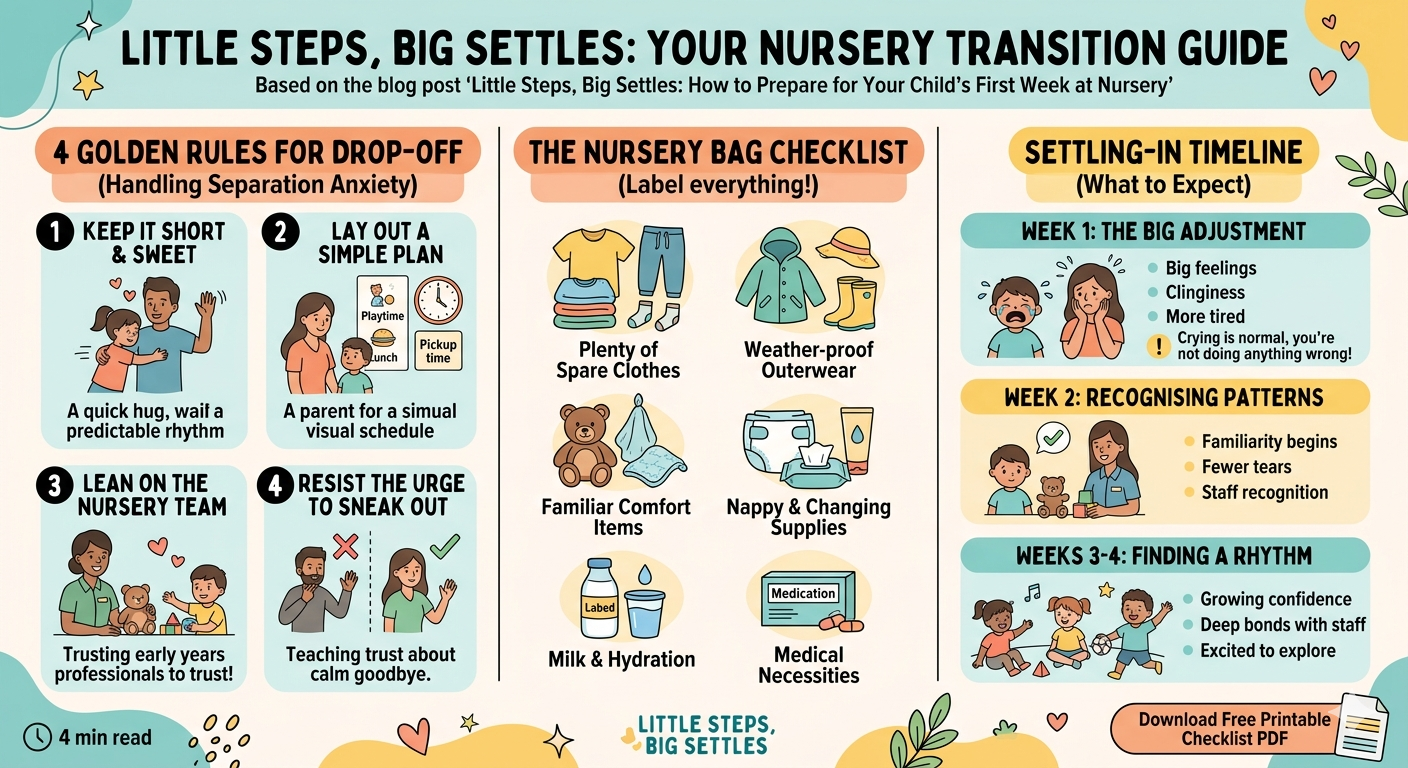
Nursery drop-off feeling overwhelming? This guide covers what to pack for nursery, how to handle separation anxiety, and a realistic week-by-week timeline for your child's first month. Plus a free printable checklist.
There is a unique mixture of excitement and heavy-hearted anxiety that comes with watching your little one take their first steps into the world of childcare. If you're wondering how to prepare your child for their first week at nursery, you're not alone.
As a parent, you've likely spent months holding them close, and suddenly, the reality of the nursery drop-off is just around the corner. If you are feeling a knot in your stomach, please know this: it is entirely normal.
The transition into daycare or nursery is a massive milestone for the whole family. To help you navigate those first few emotional weeks, we've put together a survival guide with practical nursery drop-off tips, an ultimate packing checklist for nursery, and a reassuring timeline of what to expect.
💡 Prefer a printable version? We've turned the emotional handover tips, the full packing checklist, and the week-by-week timeline into a beautiful one-page printable. Download our free Little Steps, Big Settles PDF checklist →
Nursery Drop-Off Tips: How to Say Goodbye Without the Tears
The hardest part of the entire nursery journey is almost always the moment you turn around and walk out the door. It's easy to feel like you're abandoning your child, but children are incredibly perceptive — they look to your face and tone to decide if they are safe.
If you're worried about how to handle nursery separation anxiety, these four golden rules of the emotional handover will help build a confident, secure separation:
Keep it short, sweet, and consistent
Prolonging the goodbye often stretches out the distress for both of you. Aim for a predictable rhythm: one big hug, one reassuring goodbye phrase, one swift handover to their assigned key person, and then walk away confidently. Even if they are crying, a quick exit allows the staff to start soothing them immediately.
Lay out a simple, predictable plan
Young children don't understand time, but they understand the sequence of their day. Use clear, concrete milestones they can grasp. Try saying something like: "Daddy is going to work now, you are staying to play with [Name], and I will be right back to get you after your afternoon tea." Knowing what comes next builds immense safety.
Lean on your nursery team
It can be tempting to linger outside the door or wait for your toddler to stop crying before you leave. However, trusting the early years professionals to step in quickly with a warm welcome, playful distractions, and comfort is the fastest way to help your child settle.
Resist the urge to sneak out
When your child is momentarily distracted, slipping out the door unnoticed might seem like the easiest option. But when they turn around and realize you've vanished, it can trigger intense panic. Saying an honest goodbye teaches them a vital life lesson: separations are temporary, predictable, and nothing to fear.
What to Pack in Your Child's Nursery Bag: A Complete Checklist
Packing your child's nursery bag is about more than just checking items off a list — it's about ensuring they feel comfortable, dry, and regulated throughout their busy day of exploring. When putting their backpack together for that first week, make sure everything is clearly labelled with their name, and include these nursery bag essentials:
Plenty of spare clothes: Messy play, painting, and occasional toilet accidents mean your child will likely go through outfits quickly. Pack a small bundle of easy-to-change layers like leggings, joggers, t-shirts, and several pairs of extra socks and underwear.
Weather-proof outerwear: Most nurseries champion outdoor play rain or shine. Make sure they have a seasonal coat, a sun hat or winter beanie, gloves, and a sturdy pair of wellies (rain boots) left in their cubby for puddle jumping.
Familiar comfort items: Moving into a new environment can be overwhelming. Sending a little piece of home — whether it's a favourite soft plush toy, a small muslin blanket, a comforter for naptime, or even a laminated family photo they can look at — offers incredible emotional grounding.
Nappy and changing supplies: If your child is still in nappies, ensure their bag is stocked with a fresh pack of nappies, sensitive wet wipes, and any specific barrier creams they require.
Milk and hydration: Depending on your child's age and your nursery's policy, remember to label and pack their daily milk bottles, formula, expressed breastmilk, or a clearly identifiable water bottle or sippy cup.
Medical necessities: If your little one has allergies or requires specific medication, ensure these are handed directly to the staff in their original packaging alongside written, signed instructions.
For a full visual checklist you can tick off on the morning of drop-off, download our free printable nursery checklist →
How Long Does It Take a Child to Settle at Nursery? A Week-by-Week Guide
How long does it take for a toddler to settle at nursery? This is the question every parent asks — and while every child develops at their own unique pace, understanding the general emotional arc of the first month can give you much-needed peace of mind.
🔍 How long until nursery drop-off gets easier?
Most parents see a real shift between weeks two and three. Here's what to expect week by week.
Week One: The Big Adjustment
Expect an influx of big feelings. Your child might be incredibly clingy at drop-off or more tired and emotional when they get home. Crying is completely normal here; they are adapting to a brand new environment and learning to trust that you will return. Crying at nursery drop-off is not a sign you're doing anything wrong — it's a sign they love you and are learning to feel safe somewhere new.
Week Two: Recognising Patterns
As the days progress, familiarity begins to take root. Your child will start recognising the friendly faces of the staff, the layout of the room, and the routine of the goodbye pattern. While there might still be tears at the door, they will likely dry up much faster.
Weeks Three to Four: Finding a Rhythm
By the end of the first month, a beautiful shift usually happens. Most children begin settling into nursery with growing confidence, building deep bonds with their key person, and genuinely excited to explore their new world.
FAQ: Your Nursery Starting Questions, Answered
How long does it take for a child to settle into nursery?
Most children begin settling significantly within 2–4 weeks, though every child is different. Some settle within days; others take a little longer. Both are normal.
What if my child cries at every drop-off?
Crying is completely normal in the first few weeks — and can sometimes reappear after holidays or illness. The key is a quick, confident goodbye and trusting the nursery team to step in. Consistency is everything.
Can I stay with my child on their first day?
Most nurseries offer settling-in sessions where you stay for an hour or two before leaving them alone for short periods. Check with your nursery about their specific settling-in policy.
What happens if my child refuses to eat at nursery?
Very common in week one. Most children start eating once they feel safe — usually by week two or three. Keep their key person updated on what they like at home.
What should I do if I'm feeling anxious about nursery drop-off?
Be gentle with yourself. It's okay to cry in the car. Use your nursery's communication app or give them a quick call for an update. And remember: you're giving your child a wonderful head start.
Be Gentle with Yourself
Remember, the transition process is a journey for you just as much as it is for your child. It is okay if you cry in the car after dropping them off. Take a deep breath, lean on your nursery's communication apps or give them a quick call for an update if you're worried, and trust that you are giving your child a wonderful head start in socialised learning.
You've got this.
Nursery drop-off feeling overwhelming? This practical guide covers what to pack for nursery, handling separation anxiety, and a realistic week-by-week timeline.
